
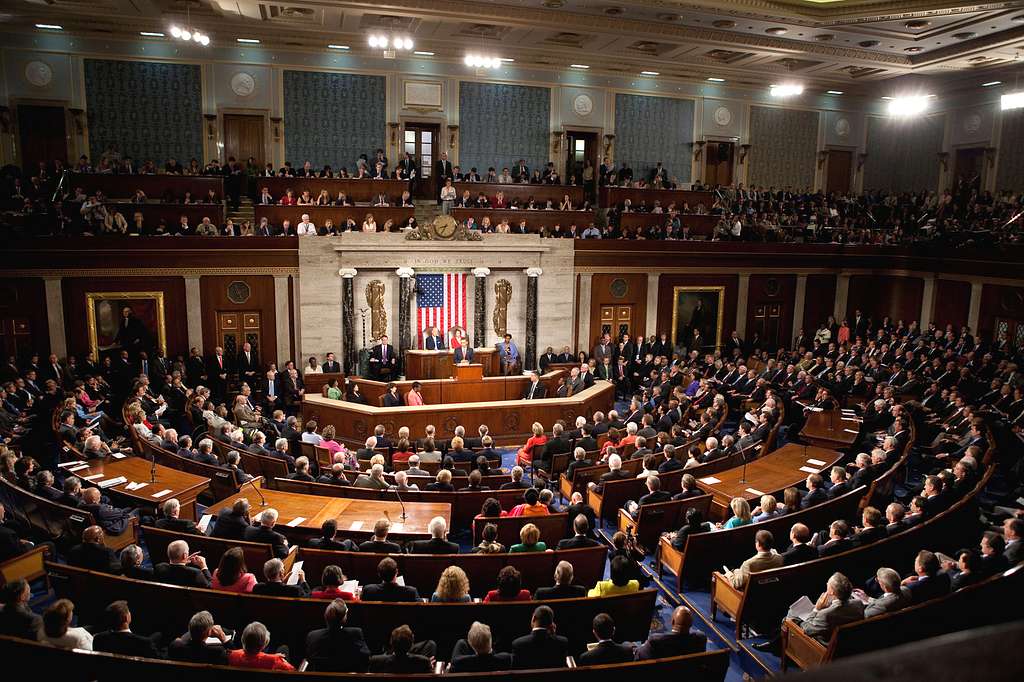
A growing confrontation is unfolding in the United States Congress over the legal authority and financial burden of the ongoing war with Iran, as lawmakers intensify efforts to reassert their constitutional role in authorizing military action while scrutinizing the administration’s escalating funding demands.
Over the past several days, the debate has crystallized into two interdependent questions: whether the president possesses the authority to continue military operations against Iran without explicit congressional authorization, and whether Congress is willing to appropriate funds for a conflict whose legal basis remains contested.
Senate Democrats have moved to force a formal reckoning. Senator Tammy Duckworth announced that she would compel a vote on a war powers resolution aimed at terminating U.S. involvement in what she described as an “unauthorized” conflict. The vote, scheduled for April 15, follows a broader strategy by Democratic lawmakers to repeatedly bring such resolutions to the floor, thereby compelling Congress to take a clear position on the legality of the war.
Senate Minority Leader Chuck Schumer has framed the issue as a constitutional imperative, arguing that Congress must not allow the executive branch to unilaterally initiate and expand hostilities without legislative oversight. Similar efforts are underway in the House of Representatives, where Democratic leadership has pledged to force another vote after an earlier attempt was procedurally blocked.
At the center of these initiatives is the War Powers Resolution framework, which requires the president to obtain congressional authorization for sustained military engagement beyond a limited timeframe. With that statutory window approaching, lawmakers face increasing pressure to either formally authorize the conflict or impose constraints on its continuation.
Parallel to the legal debate, Congress is confronting the financial implications of the war. The Department of Defense had initially explored a supplemental funding request exceeding $200 billion to sustain operations, a figure that immediately drew bipartisan concern. Subsequent discussions within the administration suggest that the request may be significantly reduced, potentially to a range between $80 billion and $100 billion, reflecting mounting resistance on Capitol Hill.
The scale of the proposed funding has become a focal point of contention. Lawmakers emerging from classified briefings have cited estimates suggesting daily operational costs ranging from $1 billion to $2 billion, intensifying concerns about the long-term fiscal sustainability of the war. At the same time, independent assessments have placed total costs thus far in a substantially lower range, raising questions about the transparency and methodology behind the administration’s projections.
Senator Chris Coons, a senior member of the Senate Appropriations Committee, indicated that congressional appetite for a large, open-ended war funding package remains limited. He suggested that a narrower approach—focused on replenishing depleted military stockpiles rather than financing ongoing combat operations—may prove more politically viable.
While Republican leadership has largely resisted efforts to curtail presidential war powers, signs of internal unease are becoming more visible. Some Republican senators have expressed concern over the duration and cost of the conflict, as well as its domestic economic consequences, including rising fuel prices and broader inflationary pressures.
In parallel, Republicans are working hard to pass funding to the Department of Home Security after two months of shutdown. Democrats halt budget proposed by the administration protesting Trump’s immigration and borders enforcement campaign. After failed negotiations, Republicans are preparing a partisan bill to pass budget reconciliation that only requires a simple majority vote in the 53-47 Senate.
Discussions have reportedly taken place within Republican ranks regarding potential legislative measures that would require the administration to seek authorization or present a defined strategy for ending the conflict. However, these considerations remain tentative, and no unified Republican position has yet emerged.



Leave a Reply