
Opinion
The USS Abraham Lincoln and the Absurdity of Endless War
The crisis aboard the USS Abraham Lincoln is not just about bad plumbing or rationed food, but a story about the profound immorality of fighting a war without a purpose.

Archive
The crisis aboard the USS Abraham Lincoln is not just about bad plumbing or rationed food, but a story about the profound immorality of fighting a war without a purpose.
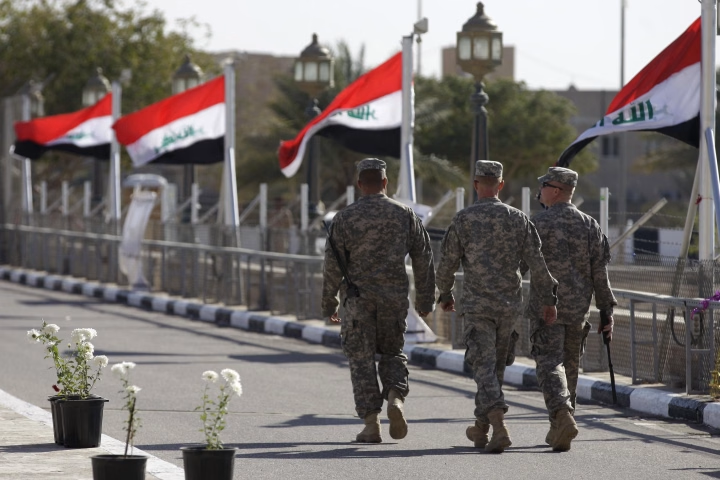
The US withdrawal could give Iraqi militias freedom to rebuild the Axis of Resistance as a source of disruption for Israel, the US and Arab states in the region.

America’s deterrence architecture in the Middle East is under growing strain, as repeated attacks, unequal security guarantees and overstretched military resources expose its weakening credibility.

After more than two decades of war and intervention, the United States has ended its military mission in Iraq, reshaping the regional balance around Baghdad.

Tehran’s claimed capture of a REMUS 600 comes as Washington and Iran negotiate over reopening the Strait of Hormuz, exposing a less visible underwater contest over mines, surveillance and control of the Gulf.

Twenty-five years after 9/11, America has strengthened its defenses but has yet to confront the political grievances, authoritarianism, and regional conflicts that help fuel Islamist extremism.

A quarter-century after 9/11 pushed American Muslims into an era of suspicion and surveillance, victories by Mamdani and Abdul signal a new phase of political confidence.

The Iran war exposed a defense economy that spent three decades prioritizing technological sophistication, efficiency and giant weapons over quantities.

After months of war with Iran, several of the American missiles most important for fighting a sophisticated adversary have been depleted at extraordinary rates. Here is the inventory.

Neither Washington nor Tehran can afford full-scale war or a lasting stalemate, leaving the Gulf trapped in costly cycles of calibrated escalation and mutual deterrence.