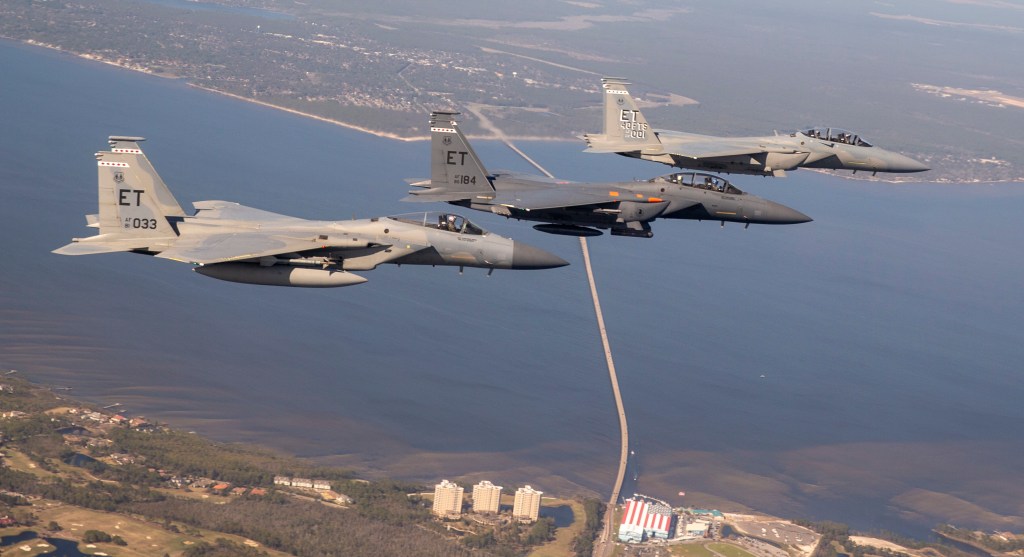
A U.S. F-15E Strike Eagle was shot down over Iran on April 3, 2026, in what Reuters described as the first known incident of its kind in the nearly five-week-old U.S.-Iran war. The aircraft had a two-person crew, and U.S. officials told Reuters that one crew member was initially recovered while the second remained missing inside Iran, triggering a major search-and-rescue effort. By April 5, Reuters and AP reported that the second crew member had also been rescued in a high-risk operation inside Iran.
The downed aircraft was an F-15E, a dual-role strike fighter with a pilot and a weapons systems officer. According to the U.S. Air Force fact sheet, it is designed for both air-to-air and air-to-ground missions and is optimized to fight at low altitude, day or night, in all weather. That matters because low-altitude strike profiles, while tactically useful, also expose aircraft to shorter-range and mobile air-defense threats more than high-altitude standoff attacks do.
The rescue operation itself became part of the story. Reuters reported that it involved dozens of military aircraft, that two Black Hawk helicopters were hit by Iranian fire but escaped Iranian airspace, and that at least one transport aircraft had to be destroyed by U.S. forces after malfunctioning during the extraction. Reuters also reported a separate A-10 incident over Kuwait after the aircraft was hit. Iran, for its part, claimed it shot down or destroyed additional U.S. aircraft during the rescue mission, but Reuters said those Iranian claims had not been independently verified.
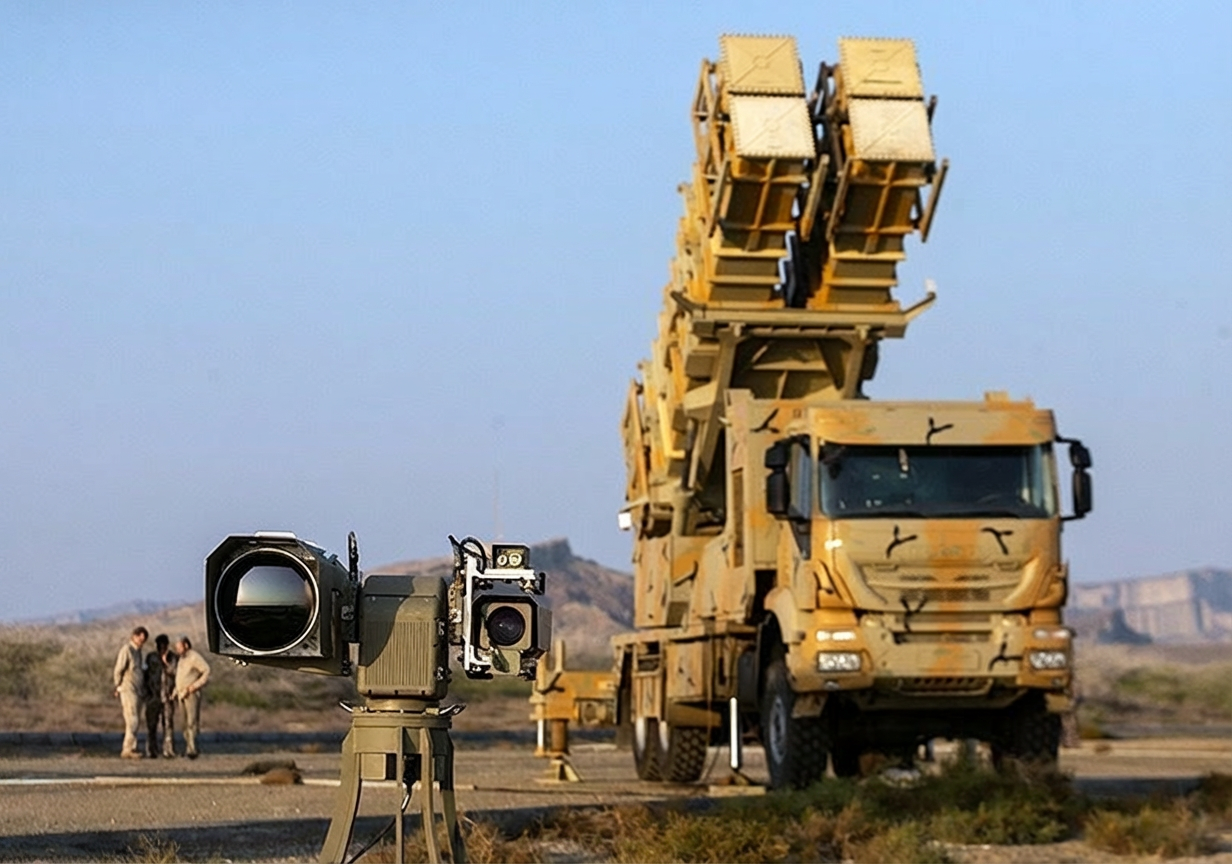
The biggest unresolved question is exactly what weapon brought the F-15E down. Widely circulated claims say Iran used a “new” air-defense system, and some tabloid and secondary reports have speculated about indigenous Khordad-family SAMs or Russian-origin MANPADS. But the key point is that no authoritative public reporting I found has independently confirmed the specific system used. At this stage, the shootdown itself is verified; the exact weapon system is not.
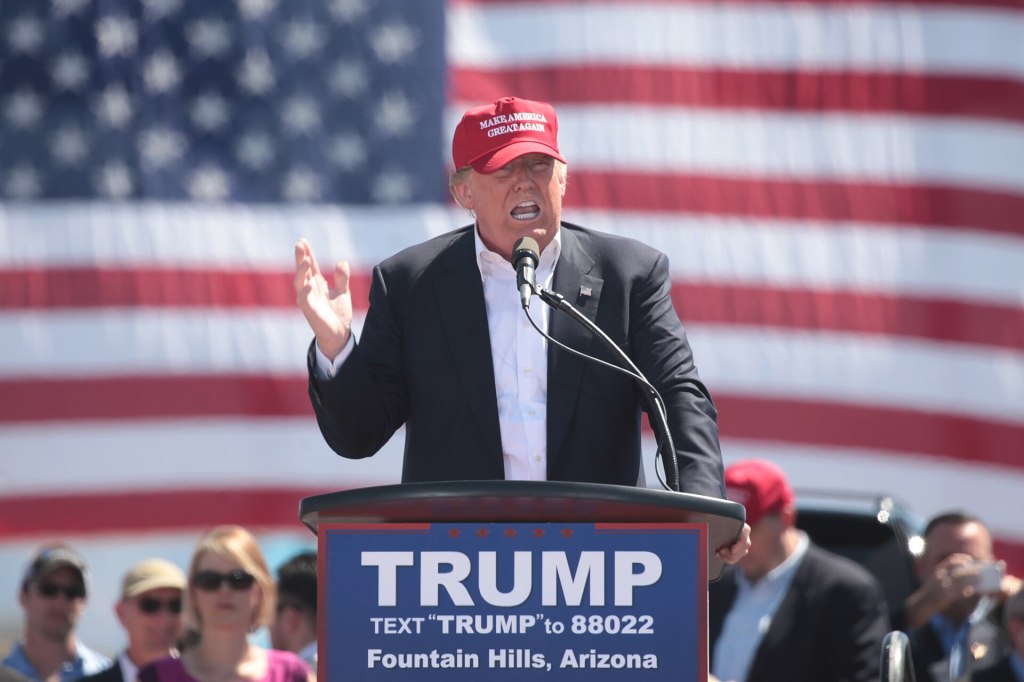
The event punctures the political claim that Iran had become militarily helpless in its own airspace. Reuters noted that the shootdown came after President Trump had publicly said U.S. aircraft were effectively operating over Iran at will. Yet the same Reuters reporting says U.S. intelligence still assessed that Iran retained substantial missile and drone capability, and that the U.S. could only confirm the destruction of about one-third of Iran’s missile arsenal as of late March. In other words, the incident is evidence that attrition of Iranian military capacity has been significant, but far from total.
CSIS’s March 25 assessment of the air campaign helps explain the broader operational context. It found that the U.S. strike campaign had settled into a sustainable pace of roughly 300 to 500 targets per day and that the coalition had achieved enough success against Iranian air defenses to enable broader use of cheaper short-range munitions and freer aircraft operations. But the same CSIS analysis also stressed that the air war was ongoing and that Iran still retained “lingering launch capacity” able to inflict damage, especially against energy infrastructure. The shootdown therefore suggests not the end of U.S. air dominance, but the limits of air dominance against a degraded yet still dangerous defender.
Operationally, the most plausible military reading is that even after heavy suppression of fixed and major air-defense nodes, Iran appears still able to threaten tactical aircraft through residual, mobile, or lower-signature systems. That inference fits both the Reuters reporting on aircraft being hit and the longstanding problem of suppressing dispersed air defenses, especially when strike aircraft operate low or must enter contested areas for search-and-rescue. It also fits the known characteristics of Iranian systems such as the Khordad-15 and Sayyad-3 family, which CSIS describes as capable of engaging aircraft at meaningful range and altitude, even though those sources do not establish that those systems were used in this case.
There is also a personnel-recovery lesson here. A downed aircraft in enemy territory forces the attacker into one of the hardest military missions: combat search and rescue under fire. Reuters and AP both indicate that the United States committed major assets to recover the crew, and that Iran sought to mobilize local forces and civilians to capture the missing airman. That means a single successful air-defense engagement did not just destroy one aircraft; it imposed a second round of risk, tied down resources, and created an opportunity for Iran to attempt a politically explosive capture.
Another military implication is messaging versus reality. Trump framed the successful rescue as proof of “overwhelming Air Dominance and Superiority.” But the same Reuters dispatch notes that Iranian fire hit U.S. helicopters and that Iran has repeatedly been able to hit U.S. aircraft. The more accurate military conclusion is narrower: the U.S. demonstrated exceptional recovery and force-projection capability, but the incident shows that “superiority” does not mean immunity from losses over defended territory.
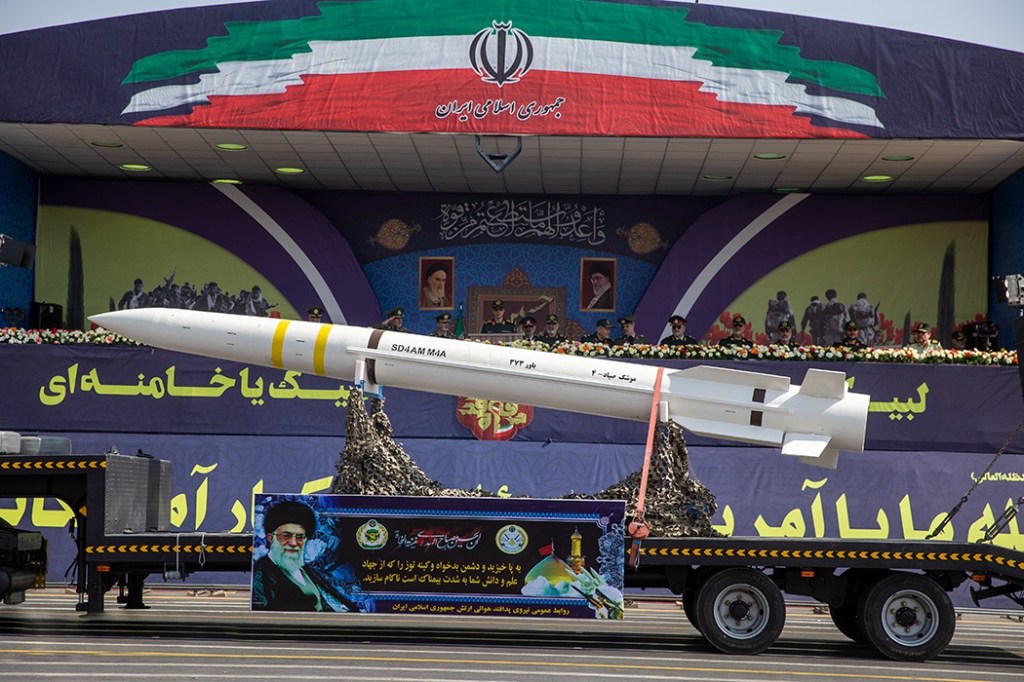
Politically, Iran gained an immediate symbolic victory. Even without capturing a pilot, it showed domestic and regional audiences that it could still shoot down a frontline U.S. manned combat aircraft after weeks of bombardment. In wars of perception, this matters almost as much as the material loss itself, because it directly challenges U.S. claims that the Iranian battlespace had already been mastered. Reuters explicitly framed the incident as raising the stakes for Washington and as proof that Iran retains capabilities despite sustained attacks.
At the same time, the United States partially reversed the political damage by rescuing both crew members. Had Iran captured one alive, Reuters noted, the episode could have become a hostage crisis with major effects on U.S. domestic politics and war support. The rescue therefore denied Tehran one of the most valuable political outcomes it might have extracted from the incident. So the net political result is mixed: Iran won a demonstration effect; Washington avoided the worst-case political disaster.
Inside the United States, the episode lands in a hostile public-opinion environment for the war. Reuters/Ipsos found that 66% of Americans want the U.S. to end its involvement quickly even if its goals are not fully achieved, and 60% disapprove of U.S. military strikes on Iran. Reuters separately reported that more than three out of four Americans oppose sending U.S. ground troops. In that setting, even a tactically successful rescue does not erase the broader political fact that the war remains unpopular and economically costly at home.
The incident also appears to have fed escalation rather than restraint at the leadership level. On April 5, Reuters reported that Trump threatened major new strikes on Iranian infrastructure, including power plants and bridges, if Tehran did not reopen the Strait of Hormuz. AP reported parallel mediation efforts involving Egypt, Turkey, Pakistan, and Oman. That means the shootdown has landed at exactly the moment when the war’s political future is being contested between escalation logic and crisis-management diplomacy.
Regionally, the timing is especially dangerous because the conflict is already entangled with energy disruption and Gulf insecurity. Reuters and AP both connect the current stage of the war to rising energy prices, strain on shipping, and attacks affecting Gulf states. In that environment, the downing of a U.S. fighter is not just a battlefield episode; it is a signal that the war remains open-ended, that escalation ladders are still intact, and that neither side has yet imposed decisive control.
Strategically, this was not a war-turning event by itself. One aircraft loss does not negate the wider U.S.-Israeli ability to strike hundreds of targets per day, nor does it prove that Iran has reestablished full air denial. But it is a strategically meaningful event because it reveals three things at once: first, Iran still possesses enough surviving defensive capacity to impose costs; second, combat search-and-rescue can multiply those costs; and third, battlefield incidents are now tightly fused to domestic politics, oil markets, and diplomacy.Militarily, the shootdown is best understood as a sharp reminder of the persistence of contested airspace even after weeks of suppression; politically, it is a propaganda win for Iran but not the full political breakthrough Tehran would have achieved had it captured a pilot; strategically, it weakens simplistic narratives of total U.S. control while strengthening the case that the war is entering a more dangerous phase of attrition, escalation pressure, and diplomatic urgency.


 ThE PUNDIT
Leave a comment