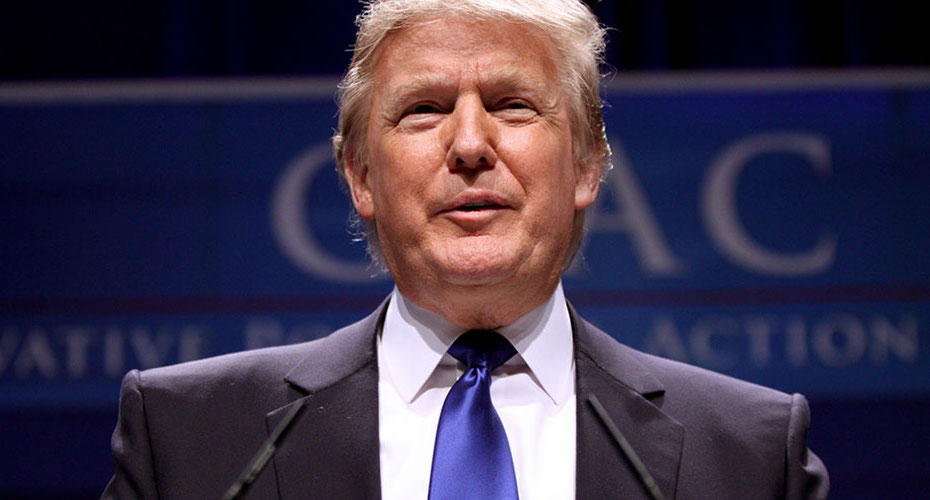
President Donald Trump escalated his threats against Iran on Monday by warning that the United States could decimate the country’s bridges and power plants if Tehran failed to meet his deadline to reopen the Strait of Hormuz.
It was not only the threat itself that drew alarm. It was also the language surrounding it: in the exchange now circulating widely online, Trump answered a question about whether bombing such infrastructure would amount to a war crime by saying Iran’s rulers “kill protesters” and then adding, “They are animals.”
Dehumanizing language has long accompanied the normalization of extreme violence, because it shifts the frame from law and civilian protection to moral disgust and punitive destruction. In this case, the remark came in direct proximity to Trump’s threat to wipe out basic infrastructure across an entire country, blurring the line between strategic coercion and rhetoric that appears to justify mass civilian suffering.
AP reported that Trump said he was “not at all” concerned about committing possible war crimes as he threatened to destroy “every bridge and power plant in Iran.”
The legal concern is not abstract. Under the laws of war, civilian objects may not be intentionally attacked unless they are being used for military purposes, and even then, any strike must satisfy proportionality and precautions rules. The problem with Trump’s formulation is its sheer breadth: threatening all bridges and all power plants suggests punishment at national scale, not narrowly tailored attacks on specific military objectives.
U.N. Secretary-General spokesperson Stéphane Dujarric said Monday that even when civilian infrastructure might qualify as a military objective, an attack is still prohibited if it risks “excessive incidental civilian harm.”
That is why legal scholars reacted so sharply. AP quoted Michael Schmitt, a prominent scholar of the law of armed conflict, calling Trump’s threat “clearly a threat of unlawful action.” Rachel VanLandingham, a former Air Force judge advocate, warned that cutting power on such a scale would predictably kill civilians by crippling hospitals and water systems.
Vox, citing former State Department legal adviser Brian Finucane, argued that the logic Trump described appeared driven less by military advantage than by political coercion and inflicting pain, which would not be a lawful military aim.
The Red Cross made a broader intervention on Monday that also speaks directly to the significance of Trump’s wording. Mirjana Spoljaric, president of the International Committee of the Red Cross, said states must respect the rules of war “in both what they say and what they do,” and warned that deliberate threats against essential civilian infrastructure “must not become the new norm in warfare.”
That statement is important because it places rhetoric itself inside the legal and moral crisis: when leaders publicly threaten civilian systems, words are not separate from violence; they prepare its ground.
Trump’s other comments reinforced that pattern. Reuters reported that he said Iranians “would be willing to suffer that in order to have freedom,” referring to the consequences of attacks on infrastructure, and said the Iranian people should rise up against their government if a ceasefire were declared. The implication was that civilian pain could be justified as an instrument of liberation. That argument is legally and ethically fraught, especially when paired with a description of the enemy as “animals.”
There is an important distinction here. Trump’s “animals” remark appears, from the available clip and reporting trail, to have been directed at the Iranian regime and its treatment of protesters, not at all Iranians as a people. But even with that narrower reading, the phrase remains dangerous in context. When a head of state uses dehumanizing language while discussing the destruction of nationwide civilian infrastructure, the effect is to lower the threshold of public revulsion toward actions that international humanitarian law is designed to restrain.
This is why the issue has moved beyond ordinary campaign-style bombast. The alarm is not simply that Trump threatened disproportionate violence. It is that he paired that threat with rhetoric that strips moral complexity from the target and turns legal prohibitions into signs of weakness. In war, that combination has a long and ugly history. It is often how exceptional brutality is made to sound necessary, righteous, and even humane.


 THE PUNDIT
Leave a comment