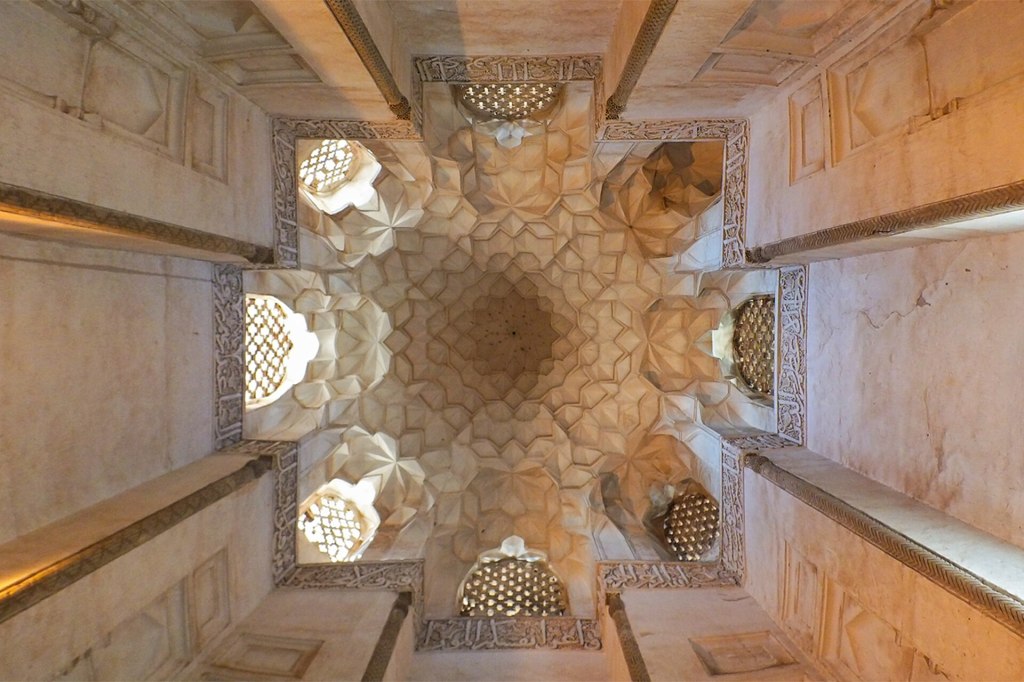
When modern political rhetoric reduces Iran to a crisis, a nuclear file, or a battlefield, it obscures one of the deepest civilizational continuities in world history. Long before Islam reshaped the ancient world, Persia had already constructed imperial systems of breathtaking sophistication — systems of administration, monumental art, courtly ethics, and enduring ideas about kingship and ordered rule that would echo across millennia. To understand Iranian civilization is to resist the temptation of reduction. It is to read history on its own vast and complex terms, beginning not at the margins but at the center of one of humanity’s richest and most consequential traditions.
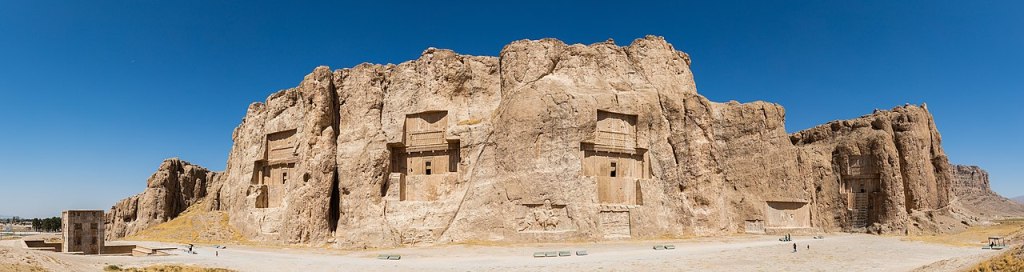
The pre-Islamic foundations of Iranian civilization are not mere prologue; they are structural. The Achaemenid Empire, founded by Cyrus II in the sixth century BCE, was the largest empire the ancient world had yet seen, stretching from Anatolia and Egypt across western Asia to Central Asia and northern India. What made it remarkable was not simply its scale but its method. The Achaemenids developed forms of rule that allowed a vast imperial geography to function with coherence: satrapal administration, codified tax collection, military recruitment across diverse populations, and local bureaucratic oversight. The empire was sophisticated in the management of diversity, scale, and distance — an experiment in imperial organization without clear precedent.
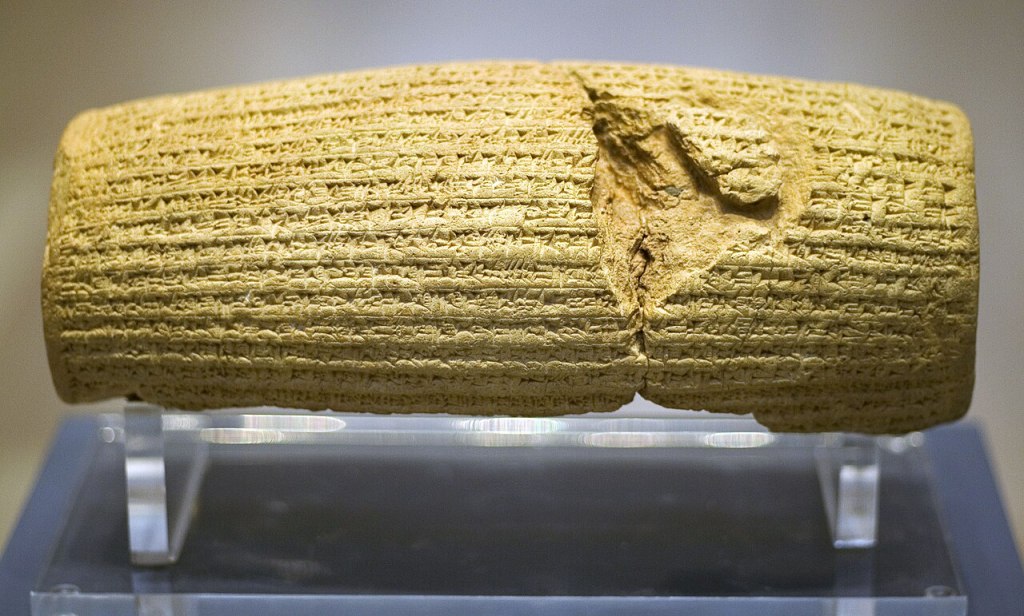
The symbolic memory of Cyrus the Great endured precisely because it fused conquest with restoration. The Cyrus Cylinder — a Babylonian account of the Persian king’s conquest of Babylon in 539 BCE — testifies to an idiom of legitimacy rooted in repair, order, and royal stewardship rather than sheer destruction. Historians are careful not to project modern human-rights language backward onto the text, yet its political imagination was unmistakably distinctive: Persian rule presented itself as the correction of disorder, the return of divine favor, the healing of what had been broken. That political style helped establish an image of Persian kingship that would resonate far beyond the Achaemenids themselves, threading through Sasanian royal ideology and eventually into Islamicate theories of just governance.
Pre-Islamic Persia was also a civilization of landscape, ceremony, and cultivated beauty. Achaemenid investment in horticulture, arboriculture, and irrigation reveals a civilization concerned not only with military dominance but with the management of fertility, settlement, and ordered space. The Persian garden — later so central to Islamic aesthetics and cosmology — was not an accidental ornament appended to empire. It was part of a civilizational imagination in which power expressed itself through the cultivation of beauty, water, and enclosure. In that imagination, the ordered garden and the ordered state were analogous acts of creative sovereignty.
After Alexander’s conquest and the Seleucid and Parthian centuries that followed, the Sasanian dynasty restored a distinctly Persian imperial formation from 224 to 650 CE. The Sasanians refined court hierarchy, imperial ritual, tax structures, and the close relationship between monarchy and Zoroastrian religious authority into an elaborate civilizational system. Crucially, some of the social and bureaucratic strata of Sasanian Iran survived the Arab conquest. The scribal estate — the dabīrs — endured after the Islamic conquest and became part of the administrative world of the new order. Iranian civilization thus entered the Islamic period not as an empty vessel awaiting content, but as a historical world dense with institutions, personnel, habits of statecraft, and an old memory of empire. The Arab-Muslim conquerors inherited a civilization, and that inheritance shaped everything that followed.
The Islamic Centuries
The Arab-Muslim conquests of the seventh century CE were a genuine watershed in Iranian history, but the history of those centuries should not be narrated as a simple rupture. Persian civilization re-entered the new Islamic dispensation as a powerful contributor, not merely as a conquered remainder. The Encyclopaedia Iranica explicitly describes the Islamic period as a time of flowering of Persian cultural contributions, pointing to Persian elites who rose to high office under the Abbasids alongside Persian-descended scholars active in theology, mathematics, astronomy, philosophy, geography, and even Arabic linguistics. The result was neither a Persian takeover of Islam nor an erasure of Persia by Islam, but a long civilizational synthesis in which Iran became central to the making of Islamicate high culture as a whole.
One of the clearest early expressions of that synthesis was institutional. Under the Abbasids, Persian administrators and courtly models became increasingly important to imperial governance. The Barmakid family — of Iranian origin from Balkh in Khurasan — rose as scribes and viziers to the early Abbasid caliphs, holding the substance of power for seventeen years of Harun al-Rashid’s reign while also serving as patrons of literature, philosophy, and science. Their story encapsulates something essential: Persia’s contribution to Islamic civilization was never only textual or metaphysical. It was also institutional. It helped build the court, the chancery, the habits of rule, and the culture of elite patronage through which the Abbasid order flourished and spread.
The Persian contribution was also emphatically linguistic. Arabic remained the sacred and scholarly language of revelation, law, and much of learned discourse, but Persian survived and then expanded as a major literary and administrative language across an enormous geographic range. Unlike Syria or Egypt, Iran maintained its linguistic identity under Islamic rule. By the Seljuk period, Persian had become a wide imperial language, and the great scholar al-Ghazali composed his Persian works in a context where Persian was becoming a lingua franca for Muslim scholars across a vast realm stretching from Anatolia to Central Asia. This linguistic durability matters enormously, because civilizations endure not only through armies or dynasties but through the languages in which ethics, memory, statecraft, and metaphysics are carried forward across generations.
No single figure better illustrates Persia’s place in the philosophical core of Islamic civilization than Ibn Sina — Avicenna. His life, beginning in the eastern Iranian world and unfolding under Samanid and post-Samanid patronage, belongs to the Persianate ecumene that linked Bukhara, Khurasan, Rayy, Isfahan, and Hamadan. Avicenna was not merely a commentator on Greek thought. He rebuilt metaphysics as a disciplined science of being qua being, gave enduring form to the distinction between essence and existence, and reworked logic, psychology, medicine, and cosmology with astonishing systematic power. His encyclopedic works — especially the Book of Healing and the Canon of Medicine — shaped centuries of Islamic philosophy, theology, and later even Latin scholasticism. To write the history of Islamic philosophy without Avicenna is impossible; to write the history of Persian civilization without him is equally so.
Abu Hamid al-Ghazali represents another dimension of Persian intellectual greatness — the capacity to move across law, theology, ethics, devotional life, and metaphysical criticism with equal authority. At once a Shafi’i jurist, an Ash’arite theologian, a philosopher, and a mystic, Ghazali’s career shows how Persian intellectual labor was foundational not only to speculative philosophy but also to the Sunni scholarly disciplines that structured orthodox religious life. Similarly, Nasir al-Din al-Tusi — trained first by a jurist in the Twelver Shi’i tradition and active in ethics, astronomy, theology, and philosophy — exemplifies the Persian scholarly world’s defining characteristic: polymathy. Between Ghazali, Tusi, and dozens of others across Khurasan, Nishapur, Tus, Rayy, Shiraz, and Isfahan, Persian civilization furnished Islamic history with a succession of scholar-sages whose work cannot be contained within any single discipline.
Space, Power, and the Ordered World
At Pasargadae — described as the earliest manifestation of Persian art and architecture in written history — the royal complex included the first known example of the “Four Gardens” plan. This early configuration reveals the fundamental character of Persian architectural thought: from the beginning, it was not concerned merely with isolated buildings but with the ordered relation between palace, landscape, water, procession, and sovereignty. Architecture in Iran emerged as a way of arranging the world itself.
One of the central features of the Iranian architectural language is the ayvān, or iwan: a vaulted hall open on one side, monumental yet spatially subtle. In Sasanian times the ayvān commonly appeared in combination with a dome, and this ayvān-dome pairing remained one of the most consistent features of Iranian architecture across successive dynasties and religious transformations. The Iranian genius often lay less in abrupt invention than in deep recomposition. Pre-Islamic forms survived, were transformed, and were given new meaning in mosques, madrasas, shrines, and caravanserais. The four-ayvān plan opening onto a courtyard — a signature of Persian mosque design — is a perfect example: a form first used in royal or ceremonial settings was reinterpreted in the sacred and social order of Islamic Iran.
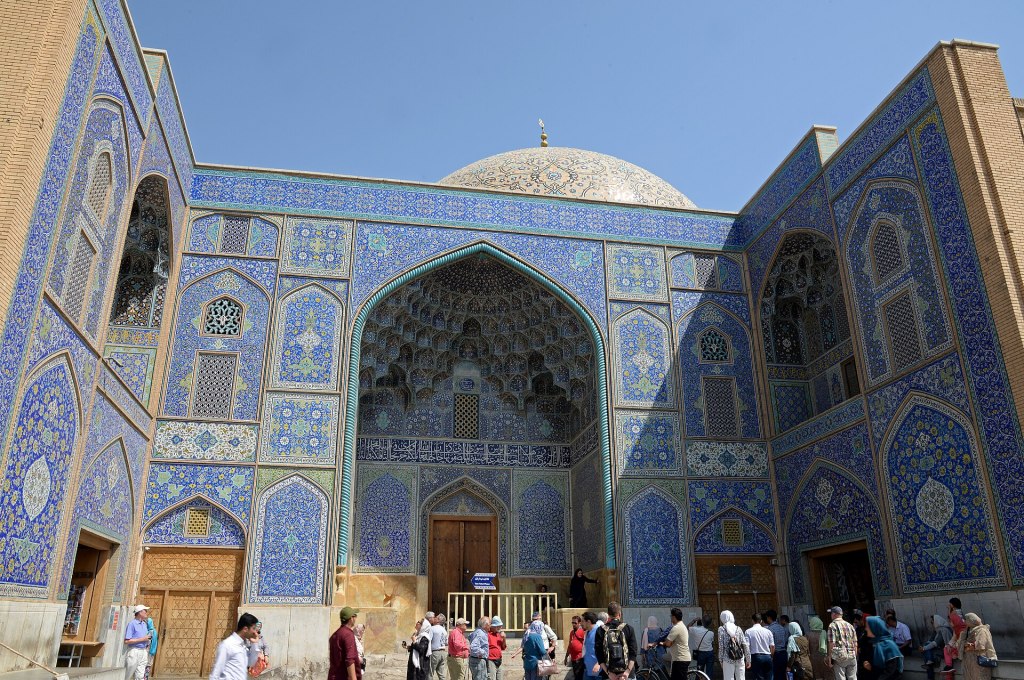
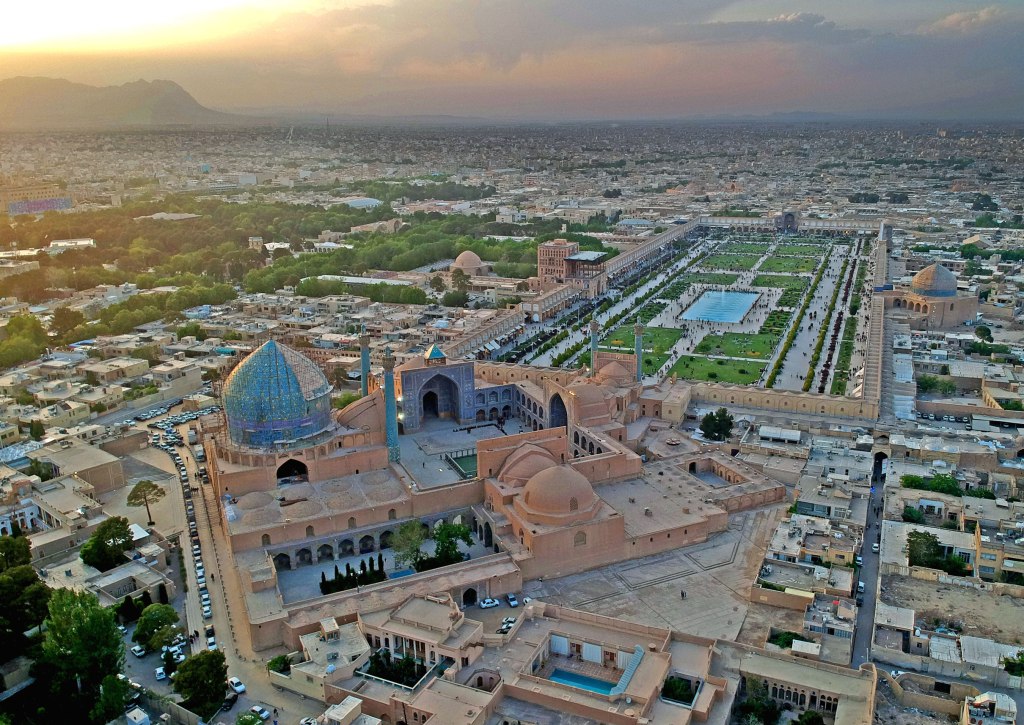
The Masjed-e Jāmé of Isfahan stands as perhaps the clearest witness to this cumulative process. Described as the oldest Friday mosque in Iran and as an illustration of twelve centuries of architectural construction and decorative styles spanning Abbasid, Buyid, Seljuq, Ilkhanid, Timurid, and Safavid periods, it became a prototype for later mosque designs throughout Central Asia. What makes this monument extraordinary is not only its age but its layered character: it is architecture as historical conversation, where each dynasty added, altered, and reinterpreted the inherited whole. Its domes, iwans, brick ornament, stucco, inscriptions, and courtyards show how Persian architecture achieved something rare — structural rigor inseparable from sensual richness. In the North Dome of the Friday Mosque, script itself becomes architecture, as calligraphic inscription is woven into the fabric of the wall with an intelligence that refuses any distinction between structure and ornament.
The Safavid period brought this architectural sensibility to its highest urban expression in Isfahan. There the Persian gift for synthesis became comprehensive. Mosque, palace, bazaar, square, garden, pavilion, and avenue were conceived not as unrelated elements but as parts of a coherent urban cosmos. Safavid Isfahan made civic life itself architectural, planning the city not only for circulation and commerce but for spectacle, sovereignty, devotion, and pleasure. Iranian architecture at this scale thinks in ensembles: the building belongs to the courtyard, the courtyard to the street, the street to the square, and the square to the imperial imagination of the city. Even the domestic tradition reflects this intelligence. The classic Persian house turns away from the street and opens inward toward the courtyard, gathering privacy, shade, proportion, and family life around an interior center — at once an ethical form, a climatic technology, and an aesthetic achievement.
Beauty as Thought
From the fourteenth to the early seventeenth centuries, Persian miniature painting became one of the most celebrated forms of Iranian visual expression, and it achieved this status because it joined calligraphy, manuscript illumination, painting, poetry, and courtly ceremony into a single civilizational language in which line, color, ornament, and narrative all served thought as much as decoration. What gives Persian painting its special force is that it is rarely interested in realism in the later European sense. It does not seek deep shadow, naturalistic perspective, or the illusion of a fixed viewpoint. Instead, it constructs a world of heightened clarity: a composed vision whose aim is not to copy the visible world but to refine it into significance.
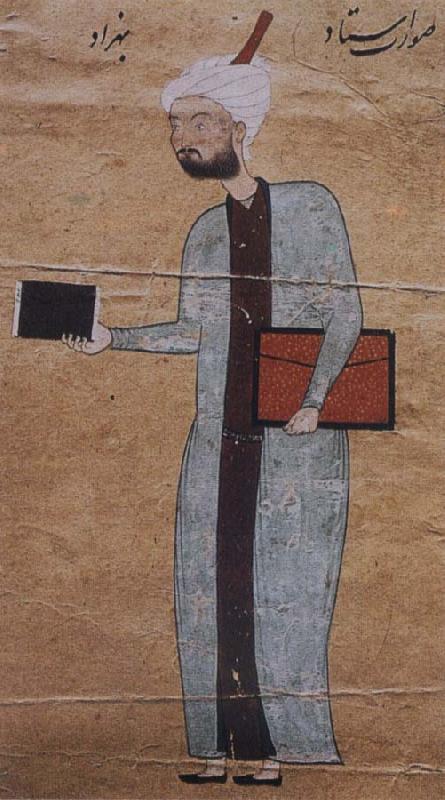
The Persian miniature is the most famous expression of this sensibility — and its intimacy with literature is essential to understanding it. These were not isolated images hung on walls as autonomous aesthetic objects; they lived inside books, accompanying epics, romances, ethical works, histories, and mystical poems. The miniature therefore emerged not apart from Persian intellectual life but inside it. It was a painting tradition born from reading, recitation, and scribal culture. The world of Ferdowsi’s Shahnameh, Nizami’s Khamsa, Sa’di’s Bustan, and Jami’s romances furnished painters with a universe of kings, lovers, ascetics, battles, banquets, hunts, gardens, and visionary encounters. In this sense, Persian painting is inseparable from Persian poetry: both love indirection, symbolism, idealized beauty, and the transformation of worldly scenes into reflections on desire, virtue, fate, and transcendence.
The historical development of Persian painting also reflects Iran’s openness without loss of identity. The surviving tradition took decisive shape after the Mongol conquests, when Iranian lands were connected more closely to East Asia through the Mongol world. Strong Chinese influences — cloud bands, stylized rocks, trees, certain compositional habits — entered Persian painting, especially in the Ilkhanid period. Yet these borrowings were never passive imitation. Persian artists absorbed them into a different visual logic governed by manuscript culture, courtly narrative, poetic symbolism, and the Persian love of ordered yet enchanted space. By the Timurid and Safavid periods, courts in Herat, Tabriz, Shiraz, and Isfahan had become centers where painters, calligraphers, illuminators, and binders collaborated to produce manuscripts of astonishing beauty — total works of art in which text, margin, script, ornament, and image were composed as one coherent whole.
The Inward Art of Modal Memory
At the center of the classical tradition stands the radif — the traditional repertory of Iranian classical music and, as UNESCO has recognized, the very essence of Persian musical culture. Consisting of more than 250 melodic units, or gusheh, arranged into larger modal cycles and transmitted through long oral training from master to disciple, the radif is a living archive. Performance is rooted in improvisation, yet that improvisation is never arbitrary; it unfolds through years of internalizing inherited melodic pathways, expressive gestures, and modal relationships. The radif embodies both the aesthetic practice and the philosophy of Persian musical culture: a way of sensing and understanding the world through guided discovery within inherited form.
The dastgah — one of the principal modal systems of Persian art music — provides the basis for both composition and improvisation, incorporating a scale, characteristic motifs, short pieces, and a recognizable musical identity. In practice, this means that Persian music does not move like a fixed, fully notated symphonic form. It moves like guided discovery: the performer enters a modal universe, lingers within it, shades it, intensifies it, and returns from it. Its power lies not in massed orchestral force or dramatic climax but in the turn of a phrase on the tar, the trembling sustain of the kamancheh, the crystalline shimmer of the santur, or the breath-laden melancholy of the ney. Persian music is built around nuance rather than spectacle, where the smallest melodic deviation can alter the emotional atmosphere of an entire performance.
Persian music is also inseparable from poetry. The classical vocal tradition does not simply sing words; it interprets them, stretches them, repeats them, and discovers within them layers of grief, longing, restraint, and ecstasy. At key historical moments — most notably during the Constitutional Revolution — the tasnif form and composers such as Aref Qazvini gave Persian music a direct political voice, speaking to collective aspiration and national self-understanding. The classical tradition’s intimacy should not mislead us into thinking it is socially minor: it has repeatedly served as an emblem of Iranian identity itself, which is precisely why UNESCO inscribed the radif on its Representative List of the Intangible Cultural Heritage of Humanity.
The Civilizational Language of Iran
Classical Persian poetry developed into a major tradition with a remarkable range of genres and technical resources, built around the bayt — the distich — and codified rhythmical schemes. This technical refinement matters because Persian poetry is not merely eloquent feeling. It is a civilization of form. Its beauty depends on measure, recurrence, symmetry, and verbal precision just as much as on imagination. What distinguishes Iranian poetry above all is its capacity to hold very different kinds of truth together simultaneously: epic and historical, lyrical and intimate, mystical and ethical, political and personal. In Persian verse, love shades into metaphysics, ethics into politics, history into legend, and grief into revelation.
No work demonstrates this civilizational function more powerfully than Ferdowsi’s Shahnameh — Iran’s national epic. It is not simply a long poem about ancient kings; it is an act of cultural preservation on the grandest scale. Through its immense sweep, Ferdowsi gave Persian civilization a textual house for its pre-Islamic memory after the Islamic conquest, ensuring that ancient Iran would survive not as ruins alone but as language, image, and moral drama. The poem’s endurance is partly tied to the remarkable continuity of literary Persian itself, which has changed comparatively little over the centuries, allowing Ferdowsi to remain astonishingly alive in the Persian-speaking imagination long after the world in which he composed has passed away. The Shahnameh thus represents a cultural act unique in world literature: the deliberate rescue and preservation of an entire civilization’s heroic self-understanding in verse.
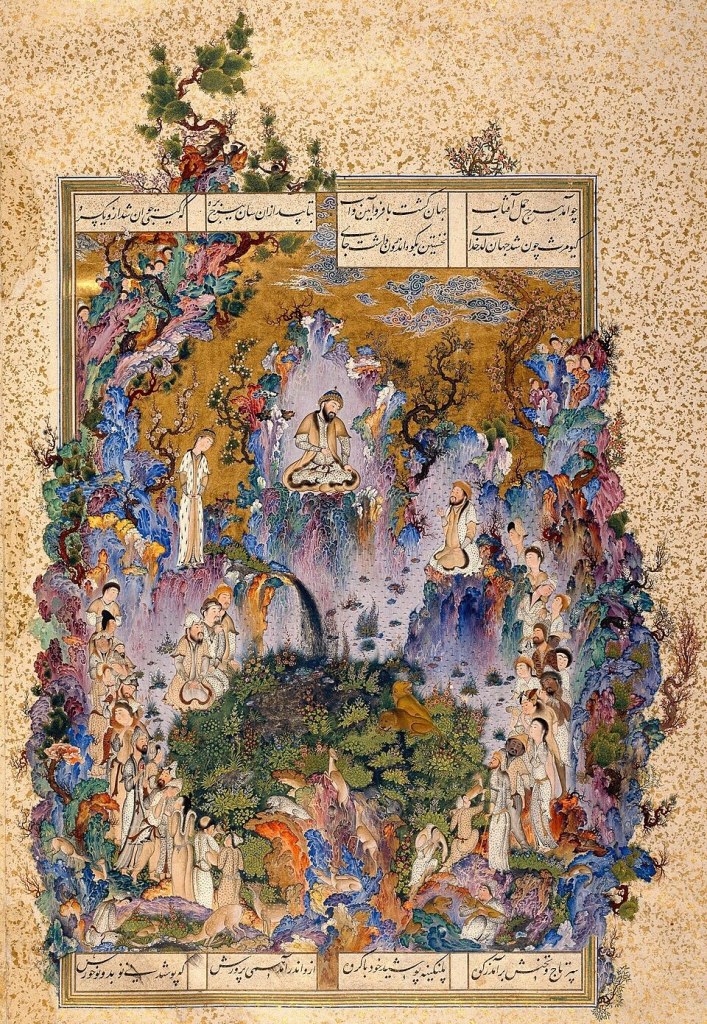
The lyric tradition, and especially the ghazal, represents another triumph of Persian poetry. In the ghazal, compression, ambiguity, and musicality reach extraordinary intensity. The beloved may be a human figure, a ruler, a spiritual guide, or a divine presence. Wine may be literal pleasure, rebellious freedom, mystical ecstasy, or the unveiling of truth. The garden may be the world, the court, the heart, or paradise. This multivalence is the genius of Persian lyric poetry: it refuses flat meaning and trains readers to dwell in resonance rather than reduction. In Saadi, Persian poetry attained an ethical elegance that few literary traditions have matched — combining worldly intelligence with moral lucidity, wit with compassion, and polished rhetoric with universal human address. In Rumi, it became a vehicle for spiritual motion itself: separation, longing, annihilation, ecstasy, bewilderment, and union all become poetic energies. The human soul is staged as a drama of exile from its source, and language becomes the music of return.
Then there is Hafez, perhaps the supreme master of the Persian lyric. His ghazals perfected a mode of utterance in which irony, devotion, eroticism, theological unease, social intelligence, and metaphysical longing coexist in the same poem without collapsing into confusion. They do not simply say; they suggest, circle, withhold, flash, and unsettle. Hafez can be read as a poet of love, a poet of mystical unveiling, a critic of hypocrisy, or a singer of beauty under conditions of transience. In Iranian life, his poetry has long exceeded the status of literature alone; it has become a mode of cultural self-recognition, consulted in moments of decision and grief, memorized across generations, quoted in conversation and statecraft alike. Such is the social depth of Iranian poetry: it was not merely written but inhabited.
The masnavi form — with its paired-rhyme structure allowing extended narratives to unfold across thousands of verses — gave Persian poetry a different but equally powerful register. The same civilization that produced the concentrated lyric intensity of Hafez also produced the vast narrative architecture of Ferdowsi and Rumi.
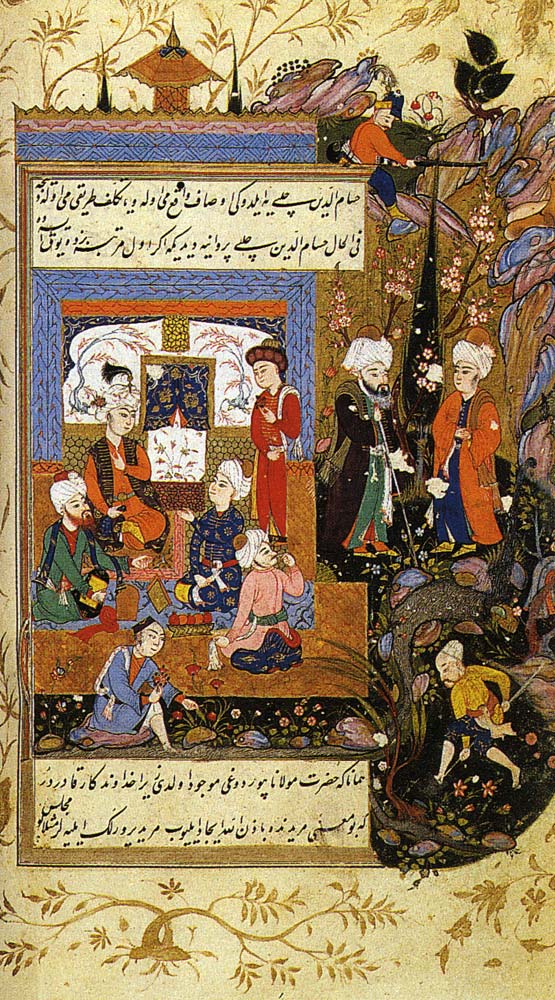
Iranian poetry could operate on every scale, from the single unforgettable couplet to the monumental book-length composition. Few literary traditions have managed such breadth without losing stylistic identity. Persian achieved it because its forms, though diverse, were all animated by the same devotion to rhythm, verbal balance, rhetorical density, and symbolic charge. Moreover, as Persian became a major literary and courtly medium across Central Asia, South Asia, and parts of the Ottoman world, this poetic tradition became a transregional civilizational force — carrying Iranian ideals, genres, and images far beyond Iran’s borders.
The Safavid Moment and the School of Isfahan
By the time one reaches the Safavid age, the story of Iranian civilization changes register without losing importance. The Safavid dynasty — which ruled from 1501 to 1736 and began as a hereditary line of Sufi shaykhs centered on Ardabil — made Twelver Shi’ism the state religion of Iran, a decision central to the emergence of a more unified national consciousness among Iran’s diverse populations. The Safavid moment was therefore political, religious, and civilizational at once: it redefined Iran not simply as a territory but as a distinctive Shi’i polity with enduring institutional consequences that still shape the country’s identity today.
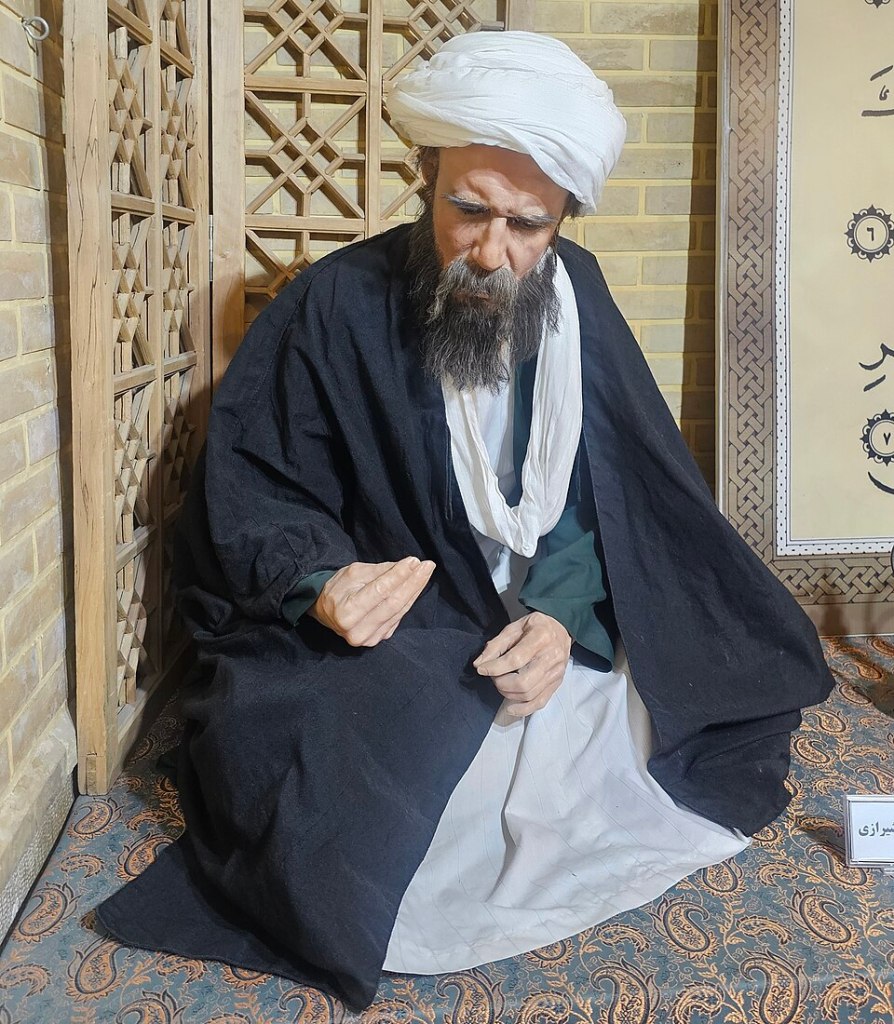
This confessional consolidation did not extinguish philosophy — on the contrary, the Safavid period helped generate one of the great later flowerings of Islamic thought: the School of Isfahan. The school represented a synthesis of philosophy, gnosis, and theology — what some scholars have called hikmah, a wisdom tradition integrating rational demonstration, mystical insight, and scriptural reflection. Its leading figures included Mir Damad, Shaykh Baha’ al-Din al-‘Amili, Mir Fendereski, and above all Mulla Sadra of Shiraz, whom some regard as the most consequential Islamic philosopher after Avicenna.
Mulla Sadra studied in the Safavid capitals of Qazvin and Isfahan and developed a philosophical vision that reworked Avicennan metaphysics, engaged Suhrawardi’s Illuminationism, drew on Ibn ‘Arabi’s mystical ontology, and incorporated Shi’i scriptural hermeneutics. His doctrines — the primacy of existence, substantial motion, and the dynamic character of created being — were not repetition of the past but philosophical renewal at the highest level. What makes Mulla Sadra especially important for the history of Persian civilization is that he embodies a long continuity. In him, the old Persian habit of synthesis reaches a new intensity: Greek inheritance, Qur’anic commentary, Shi’i theology, mystical experience, and post-Avicennan metaphysics all meet in a distinctly Iranian setting. Persia here is not a museum of ancient ruins nor merely the site of Islamic reception. It is once again a workshop of new civilizational production.
Continuity Through Transformation
Iranian civilization cannot be adequately measured by any single monument, text, dynasty, or moment of crisis. Its greatness does not lie only in Persepolis, though Persepolis matters; nor only in Cyrus, though Cyrus matters; nor only in Avicenna or Ghazali or Tusi or Mulla Sadra, though each of them matters immensely. Its greatness lies in continuity through transformation — in the ability to absorb, recompose, and generate across vast stretches of time and across radically different political and religious dispensations. Persia entered Islam and changed; Islam entered Persia and changed as well. The result was one of world history’s richest syntheses: a civilization capable of producing imperial administration and mystical poetry, legal scholarship and metaphysical daring, refined court culture and confessional state formation, all while preserving a language and historical memory that repeatedly renewed themselves.
This pattern of synthesis — never simple preservation, never mere imitation, but constant creative recomposition — appears in every domain examined here. In architecture, pre-Islamic forms were translated into sacred Islamic building without being abandoned. In art, Chinese influences were absorbed into a distinctly Persian manuscript culture. In music, the radif preserved an ancient modal intelligence while remaining a living improvisatory art. In philosophy, Greek metaphysics was rebuilt from within by thinkers who were simultaneously jurists, theologians, physicians, and mystics. In poetry, pre-Islamic narrative memory was given new life in Islamic Persian verse that then radiated outward across half the world. Across all these domains, the civilizational signature is identical: inherited form given new meaning, foreign influence domesticated into native logic, and diversity of expression sustained within a coherent identity.
It is therefore a serious historical error — and not merely a political one — to reduce Iran to a present-day geopolitical file. Behind the headlines stands one of humanity’s great civilizational traditions: a tradition that has been building, thinking, singing, writing, painting, arguing, praying, and imagining for more than two and a half thousand years. Iranian civilization survived the fall of the Achaemenids, the Macedonian conquest, the Arab-Muslim transformation, the Mongol invasion, the Safavid confessional revolution, the pressures of colonial modernity, and the upheavals of the twentieth century. In each case, it did not simply survive by inertia. It survived because it possessed the internal resources to renew itself — resources of language, form, memory, and creative intelligence accumulated across generations. That is the measure of a great civilization: not permanence, but the capacity for repeated renewal without loss of self. By that measure, Iranian civilization stands among the foremost achievements of the human world.


 THE PUNDIT
Leave a comment